_edited.png)
.png)
SONA 2026: How Ramaphosa’s Digitisation Push Can Transform South African Farming
- Addy Mabasa

- Feb 14
- 4 min read
By Addy Mabasa | February 14, 2026
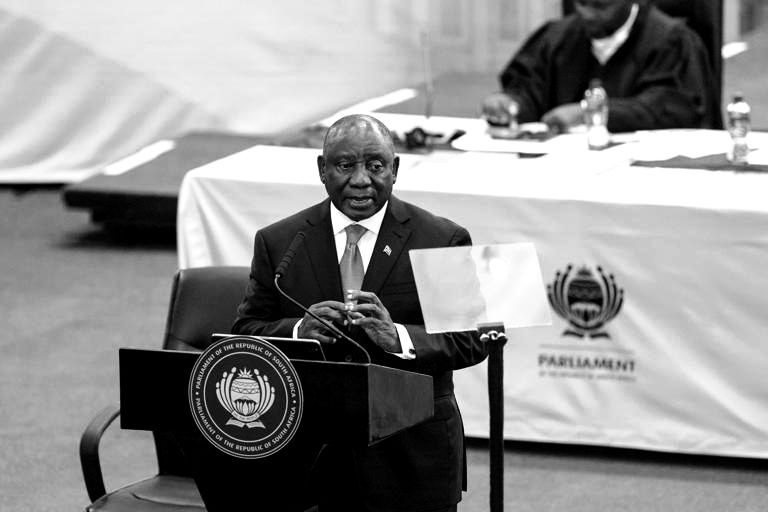
In his 2026 State of the Nation Address (SONA), delivered at Cape Town City Hall on February 12, President Cyril Ramaphosa outlined a vision for South Africa's future that places digital transformation at its core. Amid discussions on economic recovery, crime, and infrastructure, the President dedicated significant attention to the country's digitisation drive, emphasizing its role in fostering growth, inclusion, and efficient service delivery. As the African Union pushes for digital agriculture to advance Agenda 2063, these points hold particular relevance for South Africa's R400 billion agricultural sector—grappling with climate volatility, water scarcity affecting 60% of arable land, and a digital divide that leaves 2.5 million smallholders trailing in productivity.
For farmers—from maize growers to Western Cape viticulturists—Ramaphosa's remarks signal potential accelerators for AgriTech adoption. By breaking down the key talking points on digitisation and exploring their implications for agricultural digitisation, this article highlights how these commitments could bridge gaps, enhance resilience, and drive inclusive growth in a sector vital to feeding 60 million people.
Key Talking Points on South Africa's Digitisation Drive
President Ramaphosa's address was pragmatic, focusing on actionable steps to harness technology for national progress. Here are the core digitisation-related points extracted from the speech:
Harnessing Digital Transformation for Growth and Inclusion: The President emphasized that "we will harness digital transformation as a driver of growth, inclusion and effective service delivery." This sets a broad framework for integrating digital tools across sectors, including agriculture, to promote equitable access and efficiency.
Launch of Digital ID and Digitisation of Key Services: A major announcement was the rollout of a Digital ID by the Department of Home Affairs (DHA) in 2026, enabling "safe and secure use of digital services for all South Africans." Complementing this, the government plans to digitise driver's licenses, matric certificates, and Master's Office services, allowing citizens to fill out police statements online and test eligibility for SASSA grants remotely.
Major Investments in Digital Infrastructure: Ramaphosa highlighted ongoing efforts to attract investment, noting that "we are attracting major investment in digital infrastructure, with 55 data centres already built and more than R50 billion of investment expected over the next three years." This builds on reforms to expand broadband and release spectrum, aiming to enhance connectivity nationwide.
Using AI and Technology to Combat Crime and Illicit Trade: The address stressed a primary focus on "stepping up the fight against organised crime and criminal syndicates using technology, intelligence and integrated law enforcement."Specific mentions included employing artificial intelligence (AI) to address illicit trade, with measures like technology deployment to curb corruption in public procurement.
These points reflect a government committed to leveraging digitisation not just for efficiency but as a tool for broader socio-economic reform, aligning with the AU's emphasis on digital agriculture for Agenda 2063.
What These Points Mean for Agricultural Digitisation
South Africa's agricultural landscape is ripe for digital disruption, with AgriTech investments reaching USD 1.1 billion in 2025 and tools like precision farming promising 20–40% yield boosts.
Ramaphosa's digitisation agenda could supercharge this, particularly for smallholders facing a 60% productivity gap with commercial farms. Here's how the key points translate to agriculture:
Digital Transformation as a Driver of Inclusion: The President's call for digitisation to promote growth and inclusion directly supports agricultural digitisation by prioritizing tools that reach underserved farmers. This could accelerate platforms like AgriCloud or Farmonaut, offering SMS-based advisories in local languages to 2.5 million smallholders. By fostering "effective service delivery," it paves the way for digital extension services—potentially reducing post-harvest losses (up to 40%) through AI-driven market linkages and storage advice. For Agenda 2063, this means empowering women (43% of the agri-workforce) and youth with mobile tools for climate-smart practices, bridging the digital divide in rural areas where 4G coverage lags at 30%.
Digital ID and Service Digitisation: The launch of a Digital ID is a game-changer for secure agri-transactions. Farmers could use it to access SASSA-like subsidies remotely, apply for Land Bank loans without paperwork, or verify identities in co-op dealings—reducing fraud in input purchases. Digitised driver's licenses and certificates extend to agricultural permits, streamlining compliance for exports under AfCFTA. For smallholders, remote grant eligibility testing means faster access to drought relief or fertilizer vouchers, potentially lifting incomes by 22% as seen in KwaZulu-Natal pilots. This aligns with Agenda 2063 by enabling "safe and secure" digital services, fostering trust in AgriTech apps for pest alerts or yield forecasting.
Investments in Digital Infrastructure: The R50 billion in data centre investments signals a massive boost for cloud-based AgriTech, enabling real-time IoT monitoring in remote Karoo ranches or Eastern Cape valleys. With 55 data centres already operational, platforms like Aerobotics can scale drone analytics without latency, helping Mpumalanga macadamia growers cut pest losses by 30%. For agriculture, this means robust support for edge AI in low-connectivity zones—crucial for 60% of arable land under water stress. Spectrum reforms could extend 5G to agri-zones, powering autonomous tractors and reducing over-irrigation by 40%, directly advancing Agenda 2063's sustainable development goals.
AI in Crime and Illicit Trade Fighting: While focused on organised crime, the emphasis on AI and technology has ripple effects for farm security—a pressing issue with 143 attacks reported in 2025. AI could enhance rural surveillance, integrating with SAPS for predictive policing in high-risk areas like Gauteng (32% of attacks). For agriculture, this means combating illicit trade in counterfeit seeds or pesticides, protecting smallholders from losses. Measures against procurement corruption could ensure fair access to subsidies, fostering a secure environment for AgriTech investments. In the context of Agenda 2063, this builds "peaceful and secure" societies, enabling farmers to adopt digital tools without fear of theft or sabotage.
A Digitised Future for SA Agriculture: Challenges and the Path Forward
Ramaphosa's points offer a blueprint for agricultural digitisation, potentially closing productivity gaps and enhancing resilience under Agenda 2063. By 2030, experts forecast 75% AgriTech adoption, adding USD 50 billion to the sector through tools that save water, predict yields, and link markets. Yet, challenges persist: rural connectivity lags, digital literacy gaps affect 62% over 50, and costs deter smallholders.
The path forward? Leverage DALRRD's R330 million grants for subsidised tools, expand Digital Champions training to 50,000 users, and foster public-private partnerships like MTN's rural 5G pilots. As the AU's DAC urged, prioritise inclusive policies to ensure digitisation benefits all—from Highveld co-ops to Cape exporters.
SONA 2026 isn't just rhetoric—it's a call to action. For South African agriculture, embracing this digitisation drive could mean not just survival, but sovereignty in a warming world.


Comments